
How to Protect a Wig Overnight: A Beginner-Friendly 6-Step Routine
September 16, 2026 · v13cormier@gmail.com
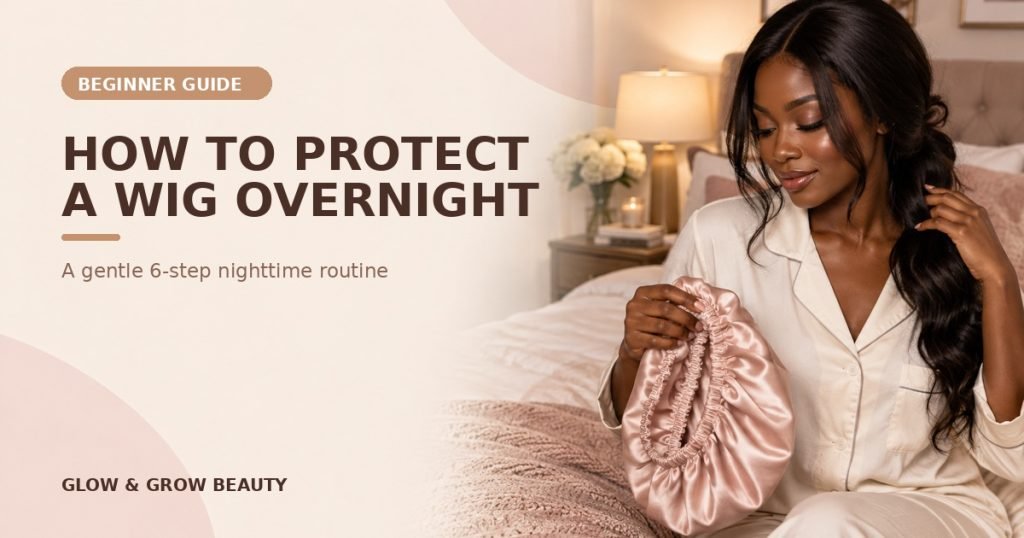
Affiliate disclosure: This article contains affiliate links. If you shop through them, Glow & Grow Beauty may earn a commission at no additional cost to you. Recommendations are based on current manufacturer information—not personal testing—and prices and availability can change.

The gentlest overnight option is to remove your wig whenever the construction and installation allow it. That gives your scalp a break and lets you store the hair properly. If you need to sleep in a secure, manufacturer-approved installation for a short period, the goal is simple: reduce friction, avoid tension and keep the hair from tangling.
This beginner-friendly routine works as a decision guide for human-hair and synthetic wigs. Always follow the wig maker’s care instructions first, because brushing, heat, moisture and overnight-wear rules vary by fiber and attachment method.
Comfort first
Do not sleep in a wig that feels tight, painful, hot or unstable. Remove it if the lace is lifting, clips are digging in, adhesive is outside its labeled wear time or your scalp feels irritated. Never tighten a band just to make a wig last through the night.
What you will need
- Clean fingers or a wig-safe detangling brush
- One soft satin scrunchie
- A roomy satin bonnet or satin-lined cap
- A satin pillowcase as a backup friction barrier
- Your wig maker’s care and attachment instructions
How to protect a wig overnight in 6 steps
Step 1: Decide whether the wig should come off
If your wig is glueless, secured with removable clips or intended for daily removal, take it off before bed. Detangle it gently, place it on an appropriate stand or in a breathable storage setup and cover the hair if needed. Sleep in the wig only when its construction and installation are designed for extended wear and everything feels comfortable.
Step 2: Detangle from the ends upward
Use your fingers first to separate large tangles. Hold the hair above the section you are working on so you do not pull at the lace or attachment points. Start at the ends and move upward in small sections. Use a brush only if it suits the wig’s fiber and texture; dry brushing tight curls can disturb the curl pattern.
Step 3: Control the length loosely
For straight or wavy hair, make one loose braid, soft twist or low ponytail. Secure only the ends with a satin scrunchie. For curls, gather the hair loosely toward the crown only if that does not strain the hairline. Avoid rubber bands, tight ponytails and multiple small sections that create pressure while you sleep.

Step 4: Cover without compressing the hairline
Place the braid or curls inside a roomy satin bonnet or satin-lined cap. The band should lie smoothly without pressing hard on the temples, lace or ears. If you wake with a deep mark or headache, the fit is too tight. Long or full wigs need enough bonnet space to prevent crushing and matting.
Step 5: Use a satin pillowcase as backup
A smooth pillowcase helps when a bonnet shifts during the night. Keep the wig dry unless the manufacturer specifically allows a damp overnight set; sleeping in wet hair can encourage tangling and make the cap uncomfortable. Keep the hair away from rough blankets, hook-and-loop fasteners and direct heat.
Step 6: Reset gently in the morning
Remove the bonnet and scrunchie without pulling. Undo the braid or twist, shake the hair lightly and separate it with your fingers. Check the perimeter and your scalp before styling. If the attachment has shifted, remove or reinstall it according to its instructions instead of covering the problem with more adhesive or tighter clips.
Helpful nighttime wig-care picks
Roomy satin protection
Kitsch Black Satin Bonnet – XL
An adjustable, extra-roomy bonnet designed to hold longer or fuller hair while providing a smooth overnight barrier.
Backup friction barrier
Kitsch Satin Pillowcase in Ivory
A smooth pillowcase that provides backup protection when a bonnet shifts and can help keep loose wig lengths from rubbing against rough bedding.
Gentle length control
Kitsch Satin Sleep Scrunchies 5pc Set
Soft satin-covered ties for securing the end of a loose braid, twist or low ponytail without using a bare elastic.
Curly-to-coily detangling
Tangle Teezer The Ultimate Detangler Naturally Curly
A detangling brush made for curly-to-coily hair. Use only when brushing is compatible with your wig’s fiber, curl pattern and care instructions.
Troubleshooting common overnight problems
The bonnet slips off
Use a correctly sized adjustable bonnet and a satin pillowcase as backup. Do not tighten the band until it leaves a mark; a different shape or satin-lined cap may fit better.
The wig looks flat in the morning
Give curls more room inside the bonnet and avoid lying on a bulky knot. Finger-fluff first, then use the wig maker’s approved refresh method.
The lace or perimeter shifts
Do not add more adhesive over a loose installation. Remove or reset it according to the attachment system’s directions.
Your scalp feels sore
Remove the wig and let your scalp rest. Overnight protection should never depend on tight bands, clips or braids.
Frequently asked questions
Is it better to remove a wig every night?
Yes, when the wig and installation are designed for daily removal. It reduces overnight friction and makes proper storage easier. Follow your maker or stylist when an attachment is intended for extended wear.
Can I sleep in a glueless wig?
A removable glueless wig is usually better taken off before bed. Sleeping in it may shift the cap, press clips into the scalp or tangle the hair.
Should I use a bonnet and satin pillowcase?
A bonnet controls the hair; a satin pillowcase provides backup if it moves. One well-fitting bonnet may be enough, but the combination is useful for restless sleepers.
Can I put a wet wig under a bonnet?
Not unless the manufacturer specifically directs it. Dry the wig by its approved method before bed so the hair and cap are not trapped damp overnight.
Build a simple overnight kit
Compare the bonnet, pillowcase, scrunchie, cap and detangling options that make sense for your wig type—without buying duplicates.
Continue your routine with our guides to washing a human-hair wig gently, refreshing a curly wig between washes and choosing wig storage for small spaces.
One comment