
How to Refresh Curls on a Human-Hair Wig Without Making Them Crunchy: A Beginner-Friendly 7-Step Routine
September 30, 2026 · v13cormier@gmail.com

Affiliate disclosure: This article contains affiliate links. If you shop through one of these links, Glow & Grow Beauty may earn a commission at no additional cost to you. Product details were checked against official brand information on September 25, 2026.
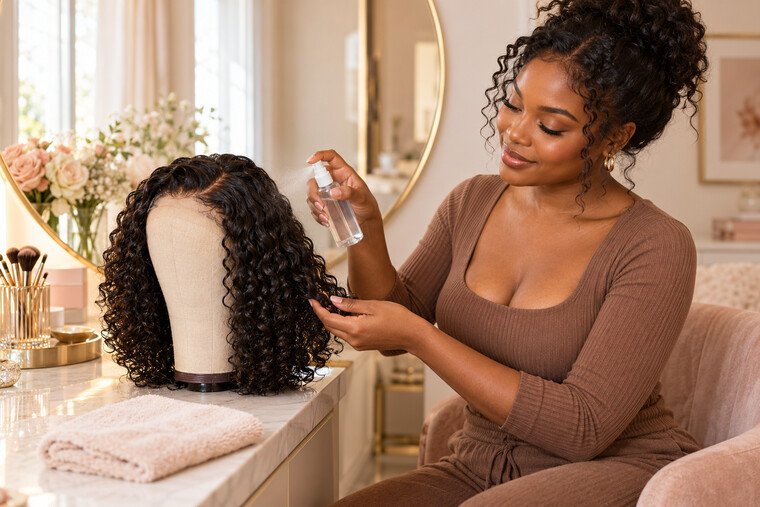
A curly human-hair wig can look soft and defined on wash day, then turn puffy, uneven or dry-looking after a few wears. The good news is that you usually do not need to wash it again. A careful refresh can revive the curl pattern while keeping the hair flexible and touchable.
This beginner-friendly routine focuses on moisture control, gentle detangling and light product layering. It is intended for human-hair wigs, not synthetic or heat-friendly synthetic fibers. Always check the wig maker’s instructions first because processing, color and construction can change how the hair responds.
Before You Begin
The light-layer rule
Start with water, add one lightweight styler only where definition is missing, and finish with the smallest possible amount of oil. It is much easier to add another drop than to remove buildup from an oversaturated wig.
What you will need
- A stable wig stand and T-pins placed through the cap material—not the lace
- A fine-mist spray bottle filled with cool or lukewarm water
- Sectioning clips
- A flexible detangling brush or wide-tooth comb
- A lightweight mousse or foam; optional curl cream for coarser, denser hair
- A satin or microfiber towel
- An optional lightweight finishing oil
Step 1: Secure the wig and inspect the curls
Place the wig on a stable stand. If you use T-pins, position them through sturdy cap material near the ear tabs and nape. Never pin through delicate lace. Look for three things: tangles at the ends, flat areas at the crown and frizzy sections that have lost their curl grouping. Refresh only what needs attention.
Step 2: Mist—do not soak—the hair
Working one section at a time, mist the mid-lengths and ends until they feel evenly damp. The hair should not drip. Too much water can make the cap heavy, loosen styling and lengthen drying time. Keep repeated sprays away from lace knots and adhesive residue.
Step 3: Detangle from the ends upward
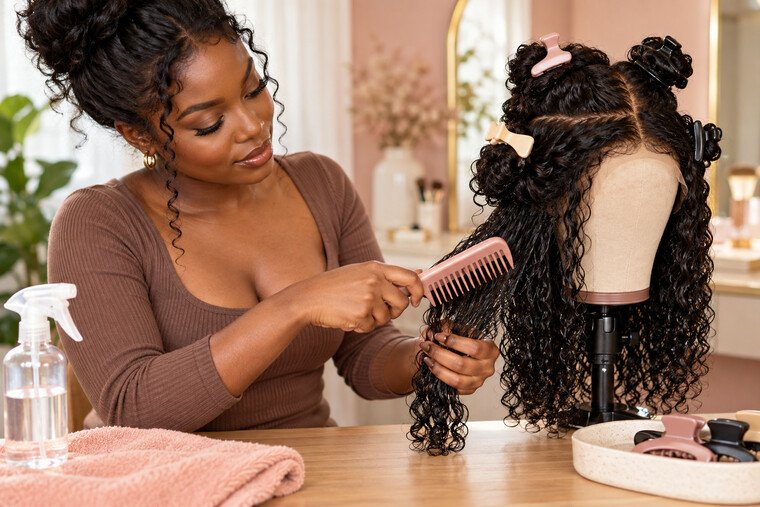
Support the section with one hand so the tension does not pull against the lace or wefts. Begin at the last inch of hair and work upward in short passes. If the brush stops, do not force it—separate the knot with your fingers, add a little slip and try again.
Detangling Support
PATTERN Detangling Nectar
PATTERN describes this as a high-slip detangler for easing combing through knots. On a wig, dilute or use sparingly and test a hidden section first so the hair does not become coated.
Step 4: Divide the hair into manageable sections
Four to eight sections usually work well, depending on density. Smaller sections create more consistent curl groups and prevent the top layers from hiding tangles underneath. Keep each section loose enough that clips do not leave dents.
Curl Tool
PATTERN Shower Brush
The flexible bristles are designed to detangle and encourage curl clumping. Use gentle pressure on damp human hair, beginning at the ends, and stop immediately if the brush catches.
Step 5: Add lightweight definition
Dispense mousse into your hands first instead of pumping it directly onto the wig. Smooth a small amount over the section, then scrunch upward. For very dense or coarse hair, emulsify a pea-size amount of curl cream with water before applying it to the driest ends. Avoid layering mousse, cream and gel all at once; mixed stylers can flake or leave curls stiff.
Lightweight Definition
The Doux MOUSSE DEF Texture Foam® 7 oz
The brand positions this foam for curl definition, shine and flexible medium-to-firm hold without a crunchy finish. Start with one pump per section and add only if necessary.
Step 6: Encourage the original curl pattern
Scrunch loose waves upward. For ringlets that have stretched, twist the section around two fingers in the direction it naturally turns, then release it without pulling. If the wig has mixed curl sizes, allow that variation—forcing every curl into the same shape can make the finish look artificial.
Step 7: Dry fully and finish lightly
Let the wig air-dry on the stand in a ventilated area. Keep it away from radiators and direct sunlight. If the manufacturer permits diffusing, use the lowest comfortable heat and airflow; apply an appropriate heat protectant first and keep the dryer moving. Do not put the wig on while the cap is damp.
Once dry, separate only the curls that look too clumped. Warm one drop of lightweight finishing oil between your palms and skim it over the ends. Stop before the hair looks coated.
Fine-Hair Finish
Moroccanoil Treatment Light
This lighter version of the brand’s treatment is intended for fine or light-colored hair and can be used as a conditioning, styling or finishing product. Use only a drop on wig ends and avoid the lace and roots.
How to choose the right amount of product
- Fine or low-density wig: water plus a small amount of mousse may be enough.
- Medium-density wig: mousse through the lengths and one drop of oil on dry ends.
- Dense or coarse-textured wig: dilute a small amount of curl cream with water, then add mousse only if more hold is needed.
- Color-treated or highlighted wig: test first; processed hair may absorb product unevenly.
Common refresh mistakes
- Brushing dry curls from root to tip
- Using heavy oil before the water-based step
- Saturating the lace, knots or adhesive area
- Stacking several stylers that were never tested together
- Using high heat without confirming the wig’s heat limits
- Separating curls before they are completely dry
Safety and care notes
Test every new product on a hidden section and discontinue use if the hair becomes gummy, stiff or unusually tangled. Keep electrical tools away from water. Do not apply a wig while its cap or foundation is damp, and never sleep in a wet wig. If the hair remains coated, matted or sour-smelling after a refresh, it is time for a proper wash instead.
For wash-day guidance, read How to Wash a Human Hair Wig Without Tangling or Drying It Out. You can also compare the supporting tools in 7 Human-Hair Wig Wash-Day Essentials Worth Buying.
Frequently asked questions
Can I refresh a curly wig every day?
Use the lightest refresh possible. Frequent soaking and product layering can create buildup, loosen the style and shorten the time between washes.
Should I use curl cream or mousse?
Mousse is usually lighter and better for fine or low-density hair. Curl cream can help coarser or drier hair, but use it sparingly on a wig because there is no scalp oil or regular rinsing to balance buildup.
Can I use this routine on a synthetic wig?
No. Synthetic fibers require products and heat settings approved for that specific fiber. Follow the manufacturer’s instructions instead.
Why did my curls turn crunchy?
Too much hold product, incompatible layered formulas or insufficient water may be responsible. Let the hair dry, then gently scrunch it. If stiffness remains, wash the wig rather than adding more oil.
Sources and product information
- PATTERN Detangling Nectar
- PATTERN Shower Brush
- The Doux MOUSSE DEF Texture Foam®
- Moroccanoil Treatment Light
The best refresh is the one that uses less
Save this routine for the next time your wig curls need a lift, and visit our Wigs & Hair section for more beginner-friendly care guides.