
7 Beginner Wig Installation Tools Worth Buying (and What Each One Does)
August 24, 2026 · v13cormier@gmail.com
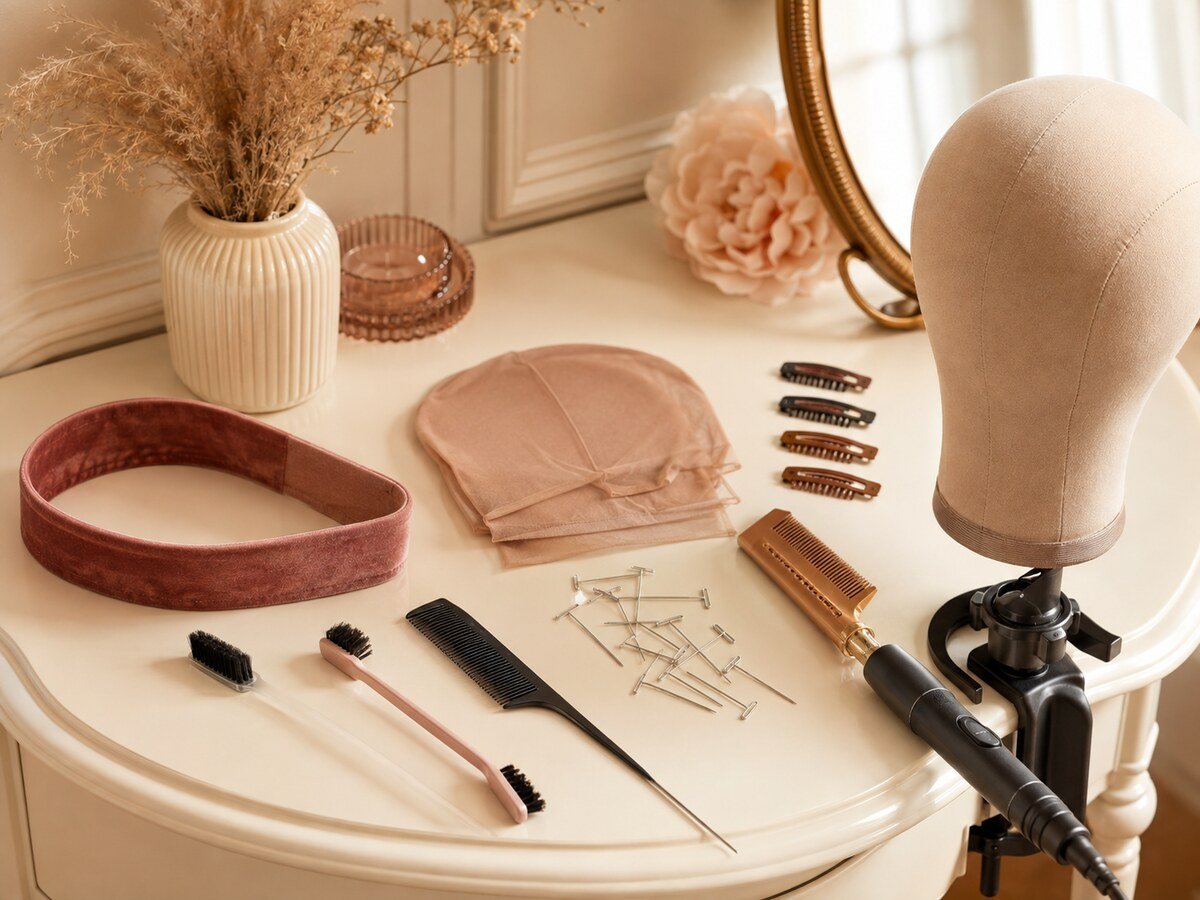
You do not need every viral wig gadget to get started. A small set of useful tools can help you create a smoother foundation, prepare a unit on a stand and style with more control. This guide explains seven categories, who each tool is for and what you can skip until your technique grows.
Quick comparison
| Tool | Best for | Beginner priority |
|---|---|---|
| Wig cap | Containing natural hair | High |
| Velvet wig grip | Reducing glueless slipping | Optional |
| Rat-tail comb | Parting and alignment | High |
| Edge brush | Small detail work | Medium |
| Clips | Sectioning hair | High |
| Canvas head, clamp and T-pins | Off-head prep | High for frequent wearers |
| Temperature-control hot comb | Flattening roots on heat-safe wigs | Advanced optional |
1. Breathable wig caps
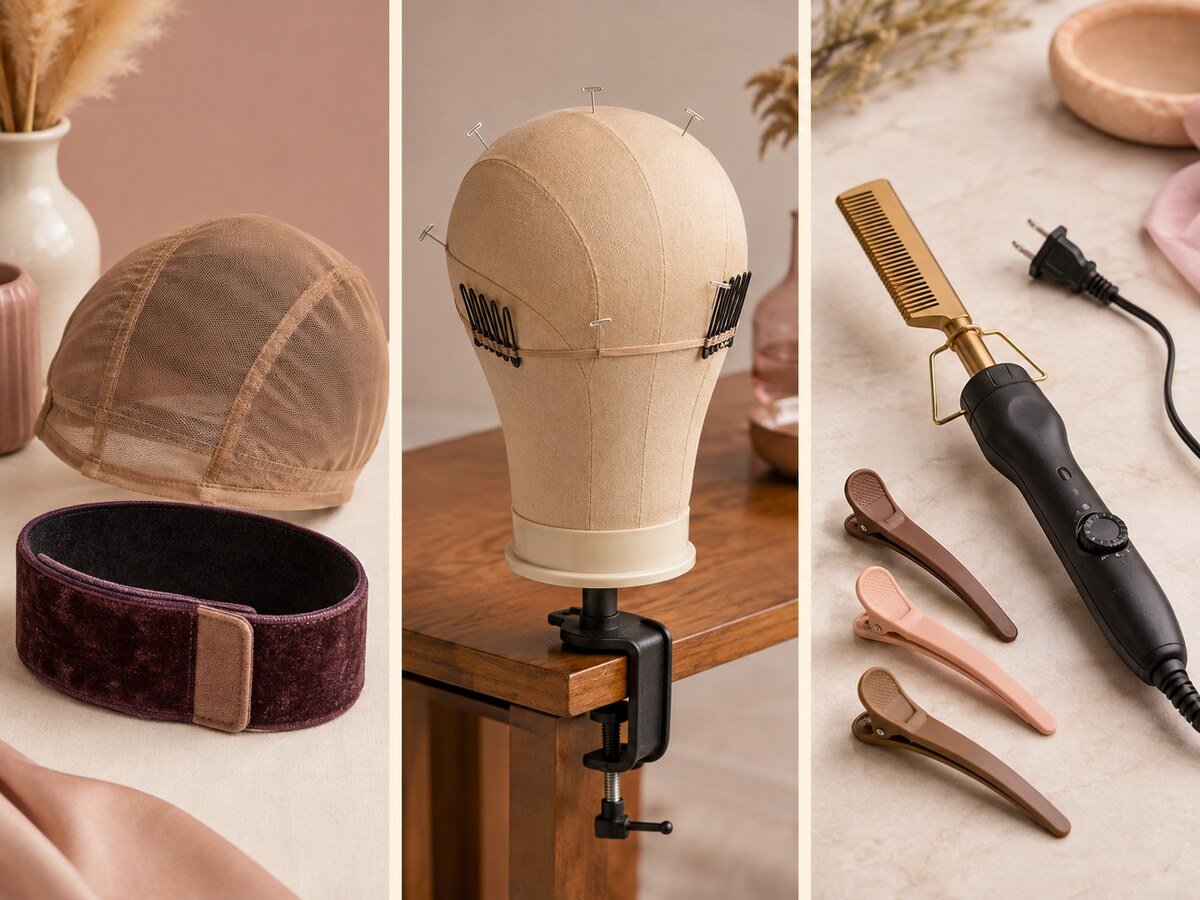
A thin cap helps contain braids, twists or short hair and creates a smoother foundation. Look for a comfortable stretch and a shade that works with your scalp tone or wig color. Multiple tight caps are not automatically more secure.
Breathable Wig Cap Multipack
A practical first purchase for containing hair beneath a wig. Replace caps that become stretched, stained or rough.
2. Adjustable velvet wig grip
A wig grip adds friction between the wig and your base, which can help a glueless unit feel steadier. Choose an adjustable style with a low-profile closure. It should sit behind the hairline and feel comfortable—not squeezed.
Adjustable Velvet Wig Grip Band
Useful for wearers whose correctly sized wig still shifts slightly. Check that it lies flat beneath the cap.
3. Rat-tail comb
The pointed tail helps create clean parts, check the center line and lift small sections; the comb teeth smooth flyaways. A sturdy tail is useful, but handle it carefully around the face and lace.
Rat-Tail Comb Set
A simple tool for parting, smoothing and precise placement. A set gives you a backup for the vanity or travel kit.
4. Double-sided edge brush
The small brush and mini comb give more control than a full-size brush near the hairline. Use light pressure. You do not have to create elaborate baby hairs for a wig to look finished.
Double-Sided Edge Brush and Comb
Helps arrange small front hairs and refine details with less product and pressure.
5. Sectioning clips
Clips keep styled hair away from the lace, ear tabs and nape while you fit or adjust the unit. Choose smooth clips that hold without snagging. Heat-resistant clips are useful if you style with warm tools.
No-Crease and Alligator Styling Clips
A mixed clip set helps separate fine front sections and hold larger lengths away from your workspace.
6. Canvas block head, clamp stand and T-pins
This trio creates a stable off-head workstation for parting, curling, pinning and storing a wig briefly while it cools. Match the canvas head circumference to the wearer’s head so you do not stretch the cap. Secure the clamp to a sturdy surface and use T-pins only on the mannequin—not while the wig is on a person.
Canvas Wig Block Head with Table Clamp
A stable base for repeated styling and preparation. Choose the circumference carefully and confirm the clamp fits your table.
T-Pins for Wig Styling
Use T-pins to anchor a wig to a canvas head at safe cap areas. Keep them stored in a closed container and away from children.
7. Temperature-control hot comb
A hot comb can help flatten the roots or top of a heat-safe human-hair wig. It is not necessary for every beginner, and many synthetic fibers can melt or deform. Verify the wig maker’s heat guidance, start low, work on a stand and never place a hot tool directly against lace or skin.
Electric Hot Comb with Adjustable Temperature
Look for temperature control, a stable rest and automatic shutoff when available. Use only on fibers the wig maker identifies as heat-safe.
Glow & Grow Beauty Walmart Creator Storefront
Browse Vanessa’s approved Walmart storefront for wig caps, stands, combs, clips and styling tools.
What you can skip at first
- Large adhesive collections: not needed for a glueless routine.
- Several heating tools: begin with heat-free styling or one temperature-control tool if the fiber allows it.
- Oversized edge-product kits: a small brush and light technique are enough for most beginners.
- Duplicate stands: one stable canvas head or appropriate stand can handle most prep.
- Tools without a clear purpose: buy when a repeated problem shows you what is missing.
How to build the kit in order
- Start with wig caps, a rat-tail comb and sectioning clips.
- Add a velvet grip only if your correctly fitted glueless wig slips.
- Buy a canvas head and clamp if you regularly style wigs off your head.
- Add T-pins with the canvas head and store them safely.
- Consider a hot comb only after confirming your wig is heat-safe and learning controlled heat technique.
Safety and care
Keep combs and brushes clean, inspect clips for rough edges and store pins securely. Avoid painfully tight bases or wig bands. The American Academy of Dermatology warns that repeated tension can contribute to traction alopecia, and it advises low or medium settings when using flat irons on natural hair. With wigs, always follow the fiber maker’s instructions because synthetic and human-hair units can respond differently.
Unplug heat tools after use, place them on a heat-resistant surface and allow them to cool completely before storage. Never use an electric tool near water or leave it unattended.
Frequently asked questions
Do I need both a wig cap and wig grip?
No. Some wearers prefer one, both or neither. The cap contains hair; the grip adds friction. Use the smallest comfortable setup that keeps the wig stable.
Is a foam mannequin head enough?
It can work for light storage and simple display, but a properly sized canvas block head is usually more stable for repeated pinning and styling.
What size canvas head should I buy?
Measure the wearer’s head circumference and choose the closest appropriate size. A head that is too large can stretch the wig cap.
Can I hot-comb a synthetic wig?
Only if the maker explicitly identifies the fiber as heat-safe and provides a temperature range. When unsure, avoid heat.
Related Glow & Grow guides
Use these tools with the wig stands versus mannequin heads comparison, the curly-wig refresh routine, and the new glueless-wig security tutorial after it is approved.
Sources
- American Academy of Dermatology: Hairstyles That Pull Can Lead to Hair Loss
- American Academy of Dermatology: Hair Styling Without Damage
- Dana-Farber Cancer Institute: How to Choose a Wig
Buy for the job you actually do
Save this list and start with the three tools that solve your current problems. A smaller, well-used kit is more valuable than a crowded drawer of gadgets.