

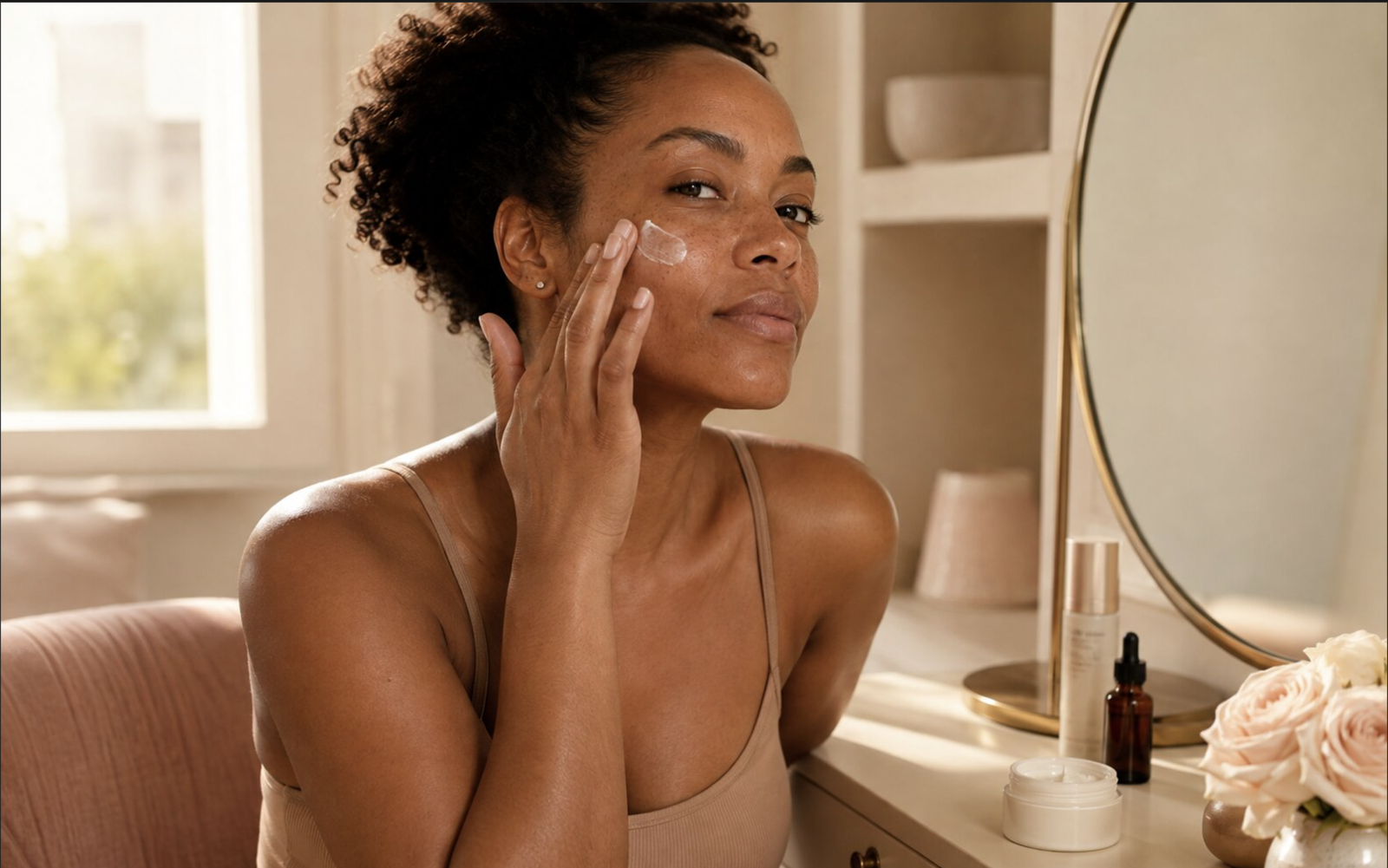
Dry patches, visible texture and little product rolls are common makeup frustrations. The goal is not to erase pores, freckles or expression lines. It is to build thin, compatible layers, give each one time to settle and apply complexion makeup with as little friction as possible.
Why makeup pills
Pilling often happens when too much product is layered, skincare has not settled, or formulas are rubbed repeatedly. The American Academy of Dermatology recommends applying treatment products first, then moisturizer or sunscreen, followed by makeup. A shorter routine can also reduce irritation.
The 7-step routine
1. Cleanse gently
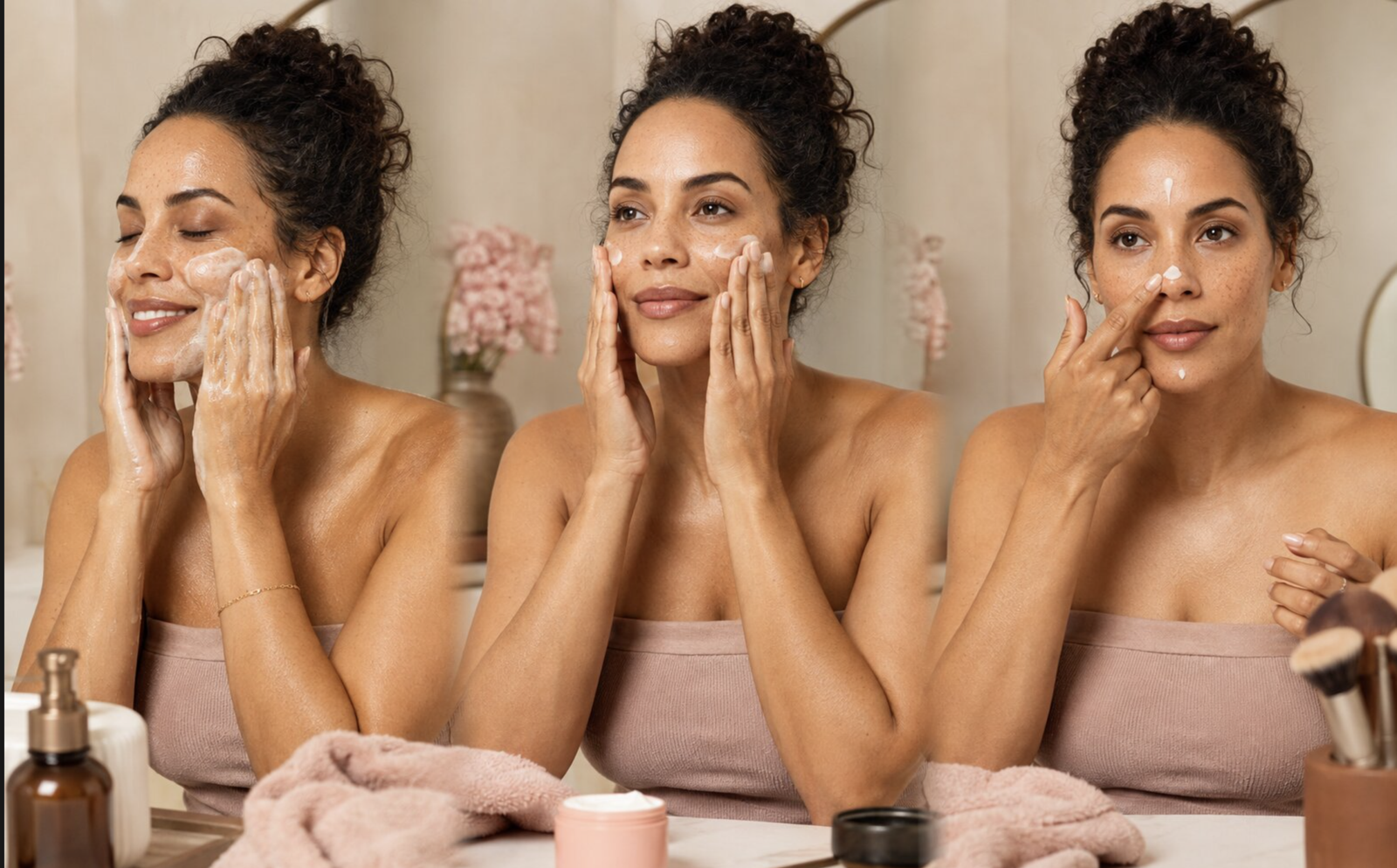
Use lukewarm water and a non-stripping cleanser. Massage with fingertips for about 30 seconds, rinse well and pat—never scrub—your face dry. If your skin feels squeaky or tight, the cleanser may be too aggressive for makeup-prep days.
CeraVe Hydrating Facial Cleanser
A fragrance-free cleanser intended for normal-to-dry skin that removes daily buildup without leaving skin feeling tight.
2. Add one light hydrating layer
On slightly damp skin, press in a small amount of toner-essence or hydrating serum. One layer is enough. Avoid stacking several sticky serums immediately before makeup.
Fenty Skin Fat Water Hydrating Milky Toner Essence with Hyaluronic Acid + Tamarind
A milky toner-essence positioned by Fenty Skin to add hydration and support the moisture barrier.
3. Moisturize strategically
Use a lightweight layer over the whole face, then tap a pinhead-sized amount onto visibly flaky zones. Let it settle for five to ten minutes. Very rich cream everywhere can make foundation slide; too little can emphasize dryness.
MAC Hyper Real Serumizer™ Skin Balancing Hydration Serum
MAC describes this serum-moisturizer hybrid as designed for use with or without makeup.
4. Protect with sunscreen in daytime
Apply a broad-spectrum SPF 30 or higher as the final skincare step when you will be outdoors. Give it time to form an even layer before primer. Sunscreen should not be skipped just to make makeup behave better.
La Roche-Posay Toleriane Double Repair Facial Moisturizer with SPF 30
An oil-free facial moisturizer with SPF 30 intended for daily use. Choose a separate higher-SPF sunscreen if that better fits your needs.
5. Choose primer by zone—not by hype
If you need extra grip, press a thin layer onto the center of the face. For enlarged-looking pores or an oily T-zone, use a pore-diffusing primer only there. If skincare already creates a smooth base, primer is optional.
e.l.f. Power Grip Primer
A translucent gel primer with hyaluronic acid designed to grip makeup and leave a dewy finish.
Rare Beauty Always an Optimist Pore Diffusing Primer
A cushiony gel primer intended to soften the look of pores and fine lines while hydrating and controlling shine.
6. Apply foundation in thin layers
Start with less than you think you need. Dot foundation only where coverage is wanted, then press with a damp sponge or use a soft brush with short tapping motions. Avoid repeatedly buffing over dry patches. Add a second sheer layer only where necessary.
7. Set selectively
Use a small fluffy brush to place minimal powder around the nose, between the brows and beneath the eyes if those zones crease. Leave the driest areas alone. Finish with a light mist from six to eight inches away, eyes closed, and allow it to air-dry.
Too Faced Hangover 3-in-1 Replenishing Primer & Setting Spray
A coconut-water-infused mist intended to prime, set and refresh makeup. Avoid spraying irritated skin and discontinue use if discomfort develops.
Quick troubleshooting
- Products roll immediately: use less, wait longer and press instead of rub.
- Foundation catches on flakes: stop adding powder; tap a tiny amount of moisturizer onto the patch before retrying.
- Base separates: simplify to moisturizer, sunscreen and one primer, then test again.
- Skin burns or stings: remove the makeup gently and stop using the new product.
Safe removal
At the end of the day, loosen makeup with a gentle cleanser or makeup remover, rinse thoroughly and moisturize. Do not scrape or use a gritty scrub on irritated, flaky skin. Persistent cracking, itching or inflammation deserves advice from a board-certified dermatologist.
FAQs
How long should skincare sit before makeup?
Five to ten minutes is a useful starting point, but the best cue is that the surface no longer feels wet or slippery.
Should primer and foundation have the same base?
Compatibility matters, but labels do not always tell the whole story. Test thin layers on one cheek before an event.
Can mature or textured skin wear powder?
Yes. Use a small amount only where movement, shine or creasing makes it useful.
Continue the look
Once your base is comfortable, try the Old Hollywood Glam Makeup Tutorial or finish with the Blended Brown Lip Combo.
Sources
- American Academy of Dermatology: skincare order
- American Academy of Dermatology: sunscreen beneath makeup