
7 Makeup Tools Beginners Actually Need (and What You Can Skip)
August 18, 2026 · v13cormier@gmail.com
Affiliate disclosure: This article contains affiliate links. Glow & Grow Beauty may earn a commission from qualifying purchases at no additional cost to you. As an Amazon Associate I earn from qualifying purchases.
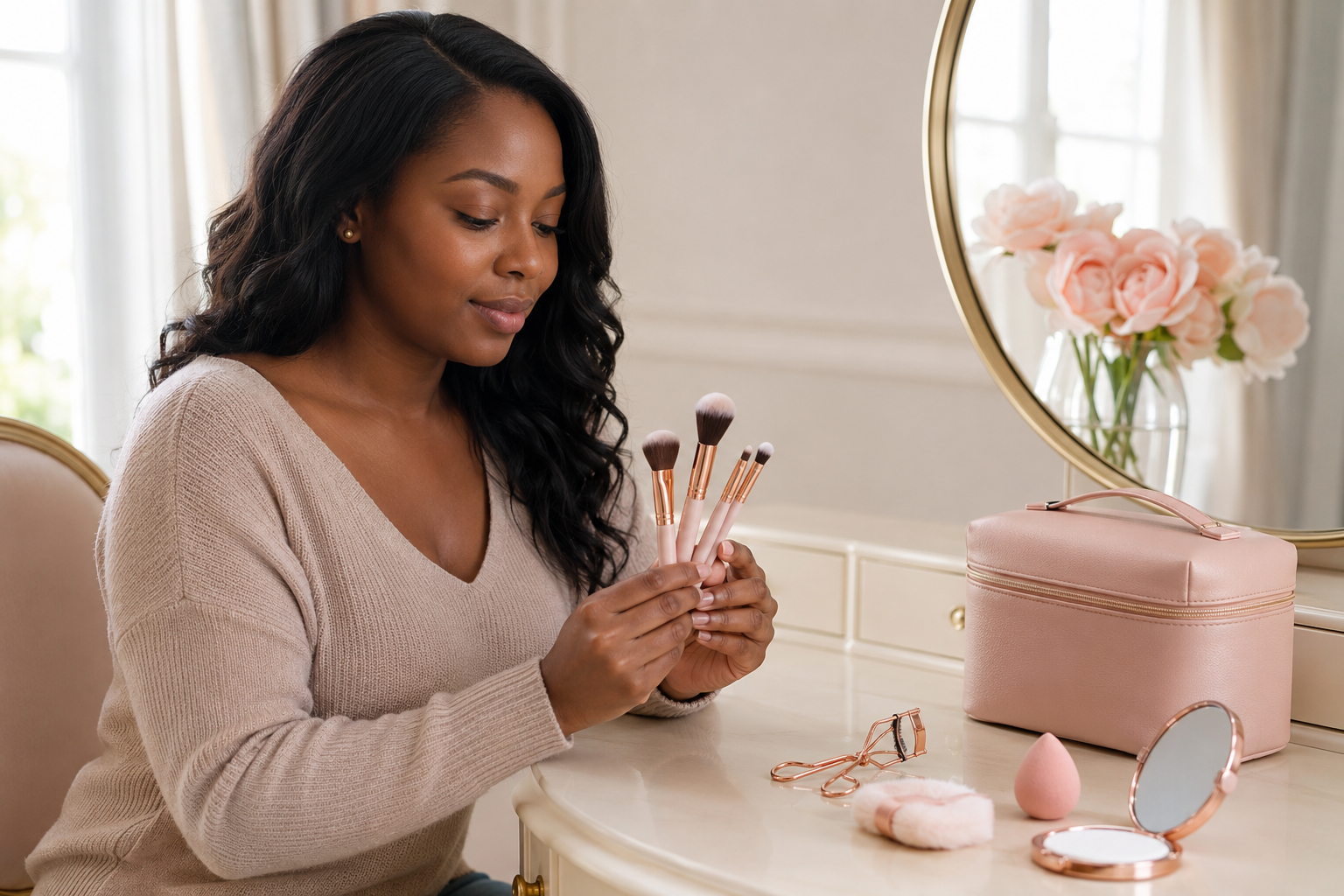
A useful beginner makeup kit does not require thirty brushes or a drawer full of gadgets. A small group of versatile, washable tools can handle complexion, powder, eyes, and finishing—and it is easier to keep clean, organized, and within budget.
This guide focuses on tool categories rather than specific brands. Choose the size, material, and price that suit your routine, read the manufacturer’s care instructions, and avoid buying duplicates until you know what you reach for.
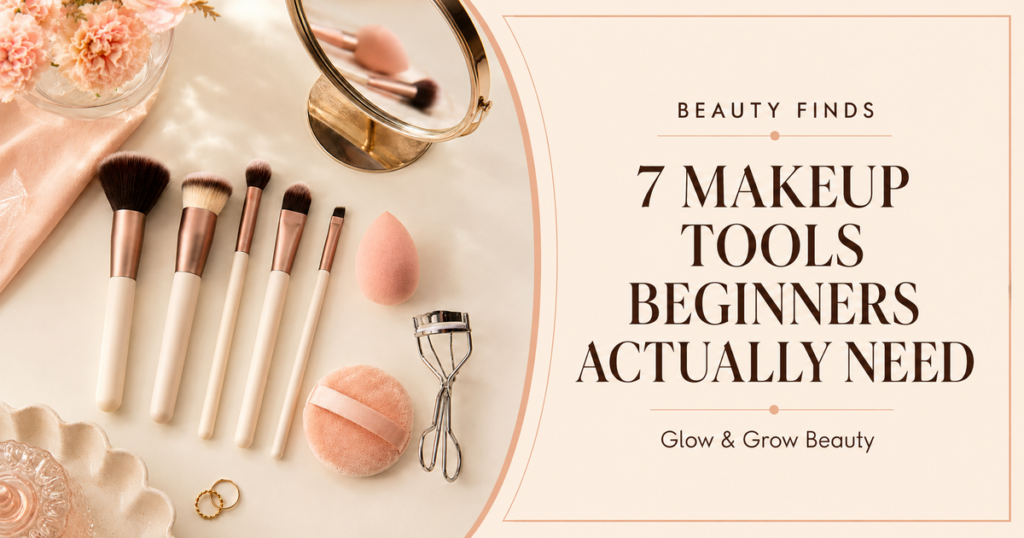
The seven-tool beginner kit
- A small versatile brush set
- A teardrop makeup sponge
- A velour powder puff
- An eyelash curler
- A lighted tabletop mirror
- A brush-cleaning mat or gentle cleanser
- A structured, washable makeup bag
1. A small, versatile brush set
Start with function, not quantity. A useful five- or six-piece set may include a fluffy powder brush, medium complexion brush, angled or tapered brush, flat shader brush, and soft blending brush. That is enough for many everyday looks.
Check that the handles feel comfortable, the ferrules do not wobble, and the bristles do not shed excessively during gentle use. Synthetic bristles are common, often work with cream and powder products, and can be easier for beginners to maintain.
What to skip for now: giant sets filled with several nearly identical eye brushes. Add specialty shapes only when you can name the exact technique they will help you perform.
BEGINNER ESSENTIAL
Small Makeup Brush Set
Look for a compact set with several distinct shapes that cover powder, complexion, blush, and basic eye blending without unnecessary duplicates.
2. A teardrop makeup sponge
A teardrop sponge can press liquid or cream foundation into the skin, blend concealer, soften cream blush, and clean up visible edges. The rounded side covers larger areas; the pointed end reaches around the nose and under the eyes.
Dampen the sponge with clean water and squeeze it thoroughly before use when the manufacturer recommends damp application. It should feel springy, not dripping. Wash it regularly, let it dry completely in a ventilated place, and replace it if it tears, develops an odor, or no longer cleans well.
COMPLEXION TOOL
Teardrop Makeup Sponges
A soft sponge can blend thin layers of liquid and cream makeup while the pointed tip reaches smaller areas of the face.
3. A washable velour powder puff
A puff gives more controlled placement than a large powder brush. Use it to press a small amount of powder onto the sides of the nose, chin, forehead, or under-eye area after smoothing any creases.
Choose a puff with a finger ribbon for control and check whether it is washable. Keep at least one clean puff available so you are not repeatedly pressing a heavily used tool into fresh product.
PRECISION SETTING
Washable Velour Powder Puffs
The finger ribbon gives controlled pressure for setting smaller areas while helping keep your hand away from the makeup surface.
4. An eyelash curler that fits comfortably
An eyelash curler can lift lashes before mascara, but fit matters. The curve should sit comfortably near—not pinching—the lash line. Use it only while still, with clean pads and gentle pressure. Never pull while the curler is clamped.
Inspect the rubber or silicone pad and replace it according to the manufacturer’s directions if it becomes cracked, compressed, or displaced. Do not share an eye-area tool.
Safety note: The FDA advises keeping instruments used near the eyes clean and never applying eye makeup in a moving vehicle, where a sudden stop could cause injury.
EYE TOOL
Comfort-Fit Eyelash Curler
Compare curler shape, pad availability, and handle comfort; use gentle pressure and keep the tool clean around the eye area.
5. A lighted tabletop mirror
Even lighting makes it easier to match foundation at the jaw, blend edges, and spot uneven application. A tabletop mirror keeps both hands free and can reduce the temptation to hold a compact too close to the face.
Look for stable construction, adjustable brightness, and a regular mirror plus modest magnification if you use it. Extremely strong magnification can make normal skin texture look alarming and may encourage unnecessary picking or over-application.
What to skip for now: oversized smart mirrors with features you will not use. A stable mirror with neutral, adjustable light can be enough.
VANITY ESSENTIAL
Lighted Tabletop Makeup Mirror
A stable mirror with adjustable light helps you check blending and color placement while keeping both hands free.
6. A simple brush-cleaning setup
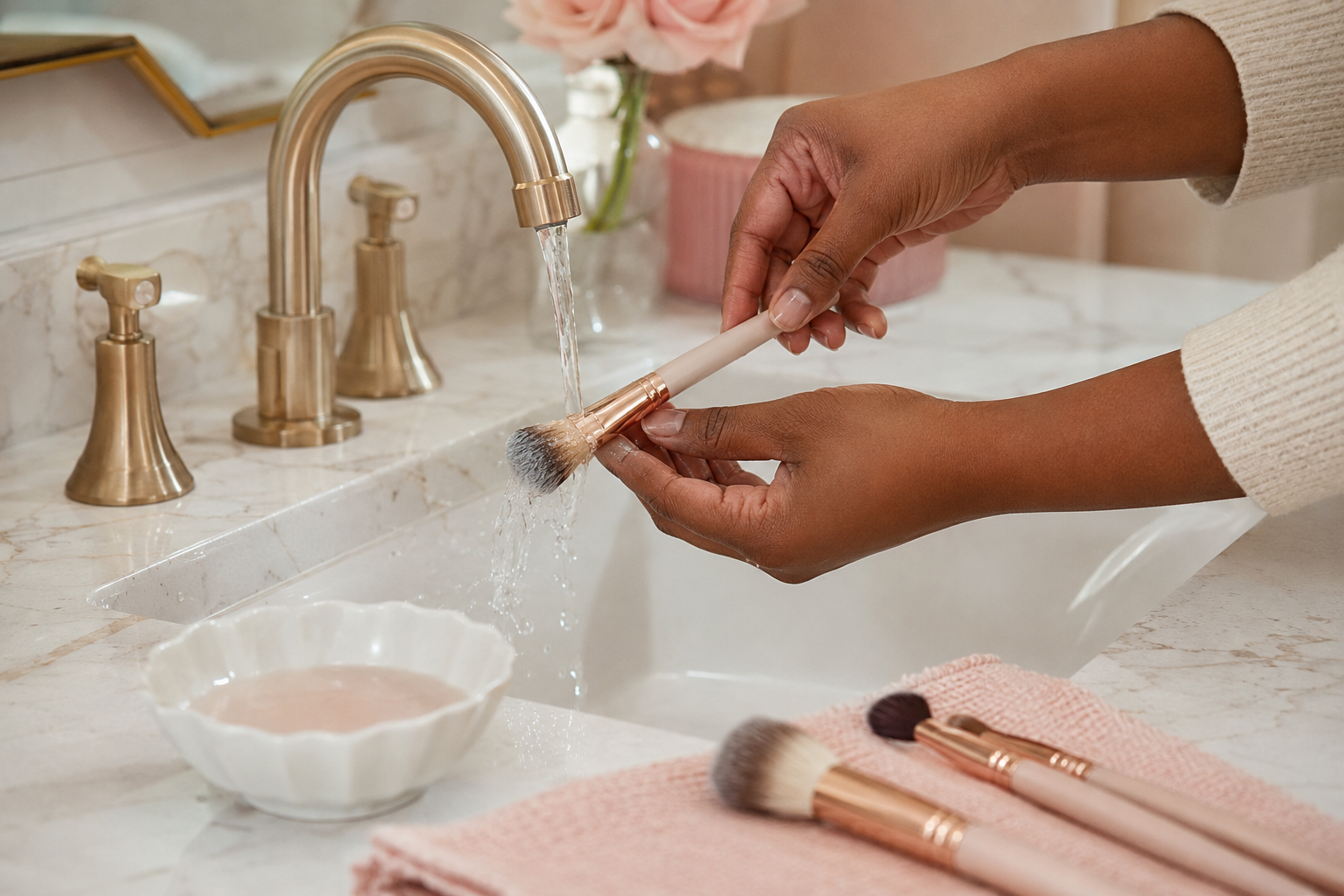
The American Academy of Dermatology recommends washing makeup brushes every seven to ten days. Rinse only the tips under lukewarm running water, work in gentle or clarifying shampoo, rinse until the water runs clear, squeeze out moisture with a clean paper towel, and lay brushes flat with the tips hanging over the counter edge to dry.
Do not dry brushes upright while wet because water can run into the ferrule and loosen the glue. Never share makeup brushes. A textured cleaning mat can help loosen residue, but gentle technique and thorough rinsing matter more than a complicated machine.
CLEAN-KIT ESSENTIAL
Makeup Brush Cleaning Mat
A small textured mat can help loosen product from brush tips while giving you control over pressure and keeping handles out of the water.
7. A structured, washable makeup bag
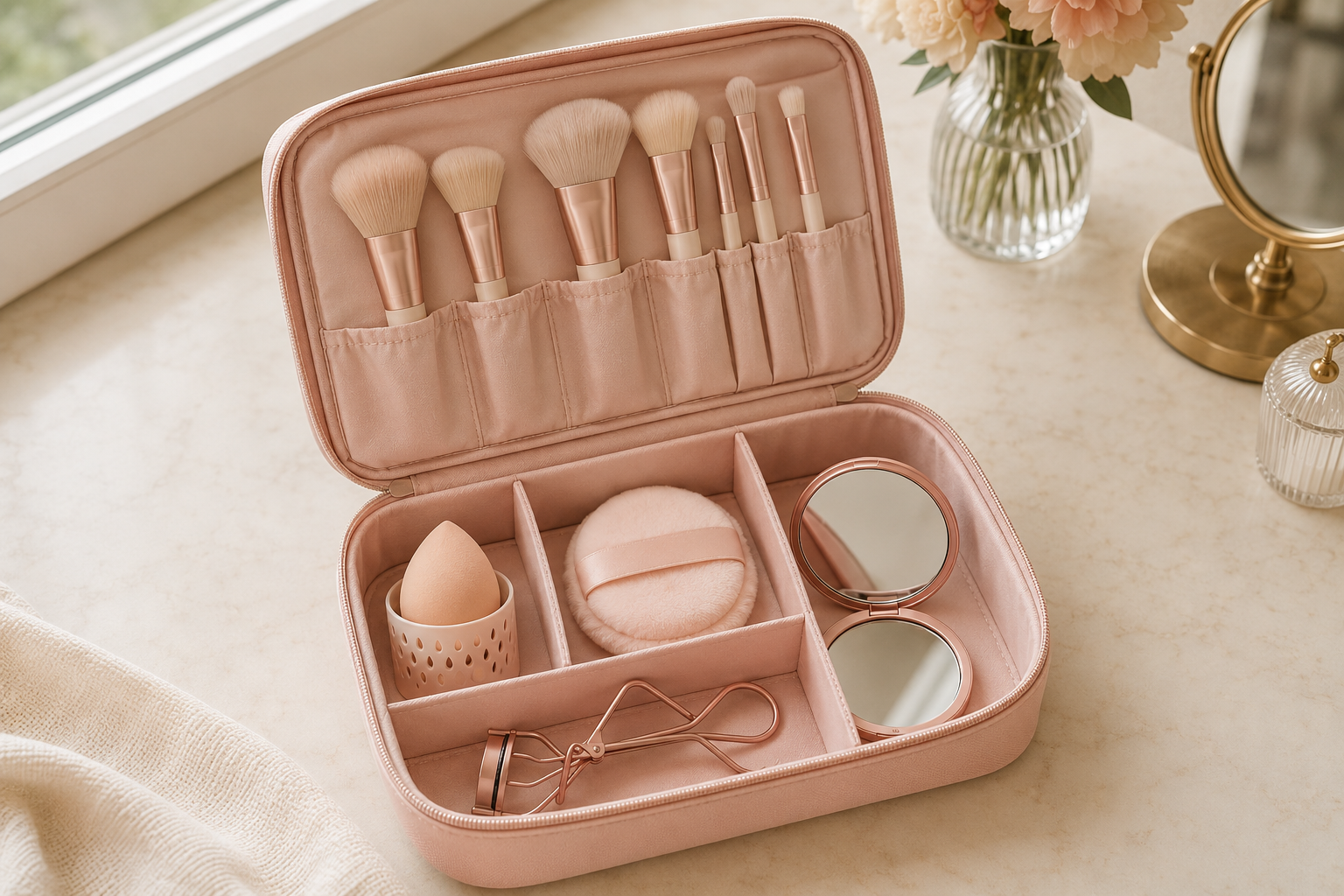
Organization protects your tools and makes it easier to notice what needs cleaning or replacing. Choose a bag that opens widely, has wipeable lining, and separates brushes from loose or wet items. A ventilated sponge holder helps prevent a damp sponge from being sealed in a closed bag.
Clean spills promptly and allow the bag to dry before restocking it. Keep eye tools covered or in their own compartment so they do not collect dust.
BEAUTY STORAGE
Structured Makeup Organizer Bag
Separate clean brushes, dry sponges, and small tools in a wipeable bag so the kit stays organized at home or while traveling.
What beginners can usually skip
- Thirty-piece brush collections: more shapes create more cleaning without guaranteeing better technique.
- Multiple foundation applicators at once: learn one sponge or brush before buying backups in every style.
- High-magnification-only mirrors: they can distort how the finished makeup looks at a normal distance.
- Electric brush-cleaning gadgets: they are optional, not a replacement for correct washing and drying.
- Unprotected loose sponges: storage should allow a clean damp sponge to dry rather than trap moisture.
- Trend-specific tools: wait until you know the technique will be part of your regular routine.
How to compare beauty tools before buying
- Define the job. Name the exact step the tool must perform.
- Check cleanability. Look for clear washing instructions and materials that can dry fully.
- Review replacement parts. Curler pads and sponge holders should be easy to maintain.
- Consider storage. Make sure the tool fits your vanity or travel bag.
- Read current product details. Verify dimensions, included pieces, materials, and care directions on the listing.
- Start small. Use the tool several times before buying duplicates.
A simple weekly tool-care routine
- After each use: wipe obvious residue from handles and close product containers.
- Every few uses: wash puffs and sponges according to their care instructions and let them dry completely.
- Every seven to ten days: wash makeup brushes using the dermatologist-recommended method.
- Monthly: wipe the makeup bag and inspect sponge condition, brush shedding, and curler pads.
- Immediately: discard or isolate tools or cosmetics involved in an eye infection, and seek medical advice when needed.
Cosmetic safety belongs in the tool kit
The FDA recommends washing hands before using cosmetics, not sharing makeup, keeping containers clean and tightly closed, and discarding products that change color or smell. Do not add water or saliva to dried mascara. Store cosmetics away from excessive heat, and follow every label direction and warning.
Makeup shelf life varies with product type, use, and storage. Applicators are repeatedly exposed to microorganisms, and heat or moisture can affect products. Keep track of when items were opened and follow the manufacturer’s replacement guidance.
Find technique ideas for using your new tools in the Glow & Grow Makeup guides.
Frequently asked questions
How many makeup brushes does a beginner need?
There is no required number. A compact set with five or six genuinely different shapes can cover many everyday looks.
Is a sponge or brush better for foundation?
Either can work. A sponge often gives a softly pressed finish, while a dense brush may provide more targeted coverage. The better tool is the one you can use and clean consistently.
How often should makeup brushes be washed?
The American Academy of Dermatology recommends every seven to ten days. Wash sooner if a tool is visibly dirty, shared accidentally, or involved in a skin or eye concern.
Can I store a damp sponge in my makeup bag?
A damp sponge should dry in a clean, ventilated place. Sealing moisture inside a closed bag is not a good storage habit.
When should I replace a beauty tool?
Replace it when it no longer cleans properly, tears, sheds excessively, develops an odor, loses shape, or has cracked or worn safety components. Follow the manufacturer’s instructions.
Shop the Glow & Grow beauty edit
CURATED BEAUTY FINDS
Vanessa’s Beginner Beauty-Tool Picks
Explore Vanessa’s current makeup tools, organizers, and beauty finds in the Glow & Grow Beauty Walmart storefront.
Sources
- American Academy of Dermatology: How to Clean Your Makeup Brushes
- U.S. Food and Drug Administration: Using Cosmetics Safely
- U.S. Food and Drug Administration: Shelf Life and Expiration Dating of Cosmetics
Glow tip: Buy the smallest kit that covers your real routine, then let repeated use—not trends—show you what to add next.