
How to Stop Mascara From Smudging Under Your Eyes: A Beginner-Friendly 7-Step Routine
October 3, 2026 · v13cormier@gmail.com


Finding a gray-black shadow under your eyes at midday does not always mean you chose a “bad” mascara. Smudging can happen when a creamy formula meets skin oils, rich eye cream, watery eyes, humidity, or lashes that naturally touch the skin. The fix is usually a combination of lighter prep, thinner coats, strategic placement, and the right formula for your routine.
This beginner-friendly routine explains how to stop mascara from smudging under your eyes while keeping lashes soft, separated, and comfortable. You can use it with a traditional water-resistant mascara or a tubing formula that wraps each lash in flexible polymers.
First, Identify Where the Smudge Starts
- Marks directly below the lower lashes: lower-lash mascara or lashes touching the skin may be the main cause.
- Marks near the outer corner: watery eyes, long outer lashes, or a heavy coat can transfer there.
- A faint shadow across the whole under-eye: skin care, concealer, or facial oils may be softening the mascara film.
- Flakes rather than smears: an aging tube, too many dry layers, or rubbing may be responsible.
How to Stop Mascara From Smudging in 7 Steps
1. Keep Eye Cream Off the Lashes
Apply eye cream sparingly and keep it on the orbital bone rather than coating the lash line. Give skin care time to settle before makeup. If the lid or lashes still feel slippery, gently press them with a clean tissue—do not rub.
2. Start With Clean, Dry Lashes
Leftover cleansing balm, facial oil, or yesterday’s mascara can interfere with a fresh coat. Use clean hands and make sure the lashes are fully dry. If you curl your lashes, do it now, before mascara; clamping a curler over dried mascara can pull or break lashes.
3. Remove Excess From the Wand
Pull the wand out once and lightly wipe a heavy blob against the tube opening. Do not pump the wand, because that pushes air into the tube and can make the formula dry out faster. A controlled amount is easier to place and less likely to transfer.
4. Build One Thin Coat at a Time
Set the wand close to the upper-lash roots, wiggle very slightly, then comb upward through the tips. Keep the coat thin and work on one eye at a time. If you use tubing mascara, add the second coat while the first is still slightly flexible, then let it set without touching the lashes.
5. Be Strategic With Lower Lashes
You do not have to coat every lower lash. Try mascara only at the outer third, use the remaining product on the wand, or skip the lower lashes completely on humid days. A slim, clean wand gives more control than a fully loaded one.
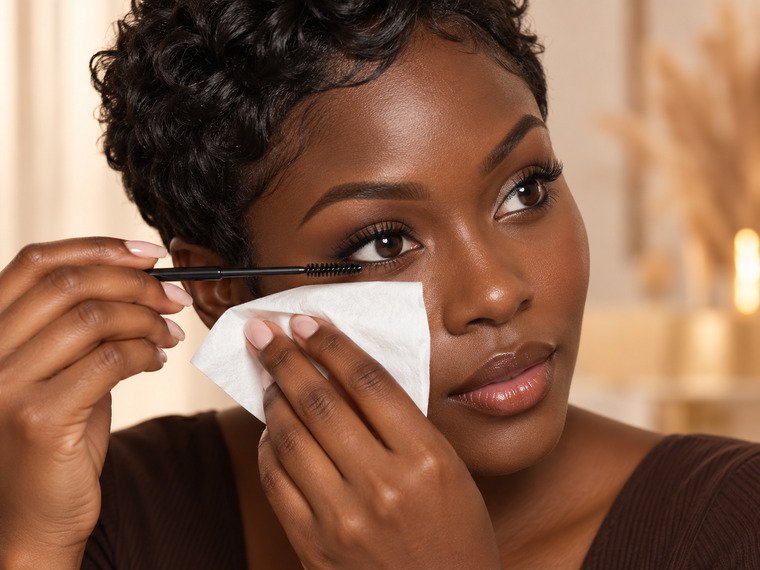
6. Set Only the Transfer Zone
After concealer has settled, press a tiny amount of finely milled setting powder where the lashes usually touch the skin. Use a small fluffy brush and a light hand. Too much powder can make the under-eye look dry and will not fix an overloaded mascara coat.
7. Let It Set, Then Check the Tips
Look down for about 20 to 30 seconds while the formula sets. If the lash tips still feel wet, lightly comb them with a clean spoolie. During the day, blot oil with tissue or blotting paper instead of adding layers of powder over a smear.
Two Smudge-Resistant Formulas to Consider
e.l.f. Lash XTNDR Mascara
A buildable tubing formula designed to lengthen and create a lash-extension effect. Its slim brush is useful when you want controlled definition instead of a thick, wet coat.
essence Bye Bye Panda Eyes! Smudge-Proof Volumizing and Defining Mascara
The brand describes this as a tubular, smudge-resistant formula made to add volume and definition. It is a practical option for testing the tubing category before committing to a prestige formula.
Shade tip: Deep black gives the most contrast, while soft black or brown can look gentler for daytime. Shade names and selection vary by formula, so compare the current options at the shopping destination rather than assuming every line offers the same colors.
Safe Application and Removal
- Wash your hands before applying eye makeup and never share mascara.
- Do not add water or saliva to a tube that has become dry.
- Stop using a product if it causes burning, swelling, persistent redness, or unusual watering.
- If you develop an eye infection, stop eye makeup and follow a clinician’s instructions about replacing products.
- Remove all mascara before bed. For tubing formulas, hold warm water against closed eyes and use gentle pressure; the tubes should slide away without tugging.
The FDA notes that eye-area cosmetics can become contaminated and that manufacturers often recommend replacing mascara within roughly two to four months. Always follow the label and discard a tube sooner if the smell, texture, or performance changes.
Frequently Asked Questions
Is waterproof mascara always the best fix?
No. Waterproof formulas can resist tears and humidity, but skin oils may still cause transfer. They can also require a stronger remover. A tubing formula may be easier for some routines because it forms a film around each lash and usually removes with warm water and gentle pressure.
Should I powder my lashes?
Skip loose powder directly on the lashes. Powder can fall into the eyes or make mascara look clumpy. If oil is the problem, set the skin where the lashes touch instead.
Why does mascara smudge only under one eye?
Your lash angle, eye shape, watering, or sleeping position may differ from side to side. Compare where the lashes touch the skin and adjust placement on that eye.
Can I wear mascara on lower lashes?
Yes, but use very little product. Focus on the outer third or use a slim brush. If transfer continues, skipping lower-lash mascara is the simplest fix.
What if the product suddenly starts flaking?
Check the tube’s age and texture. Do not dilute it. A formula that is drier than usual, smells different, or no longer applies smoothly should be replaced.
Keep Building a Smudge-Resistant Eye Look
Pair this routine with the beginner-friendly eyeshadow creasing routine, then read how to layer makeup for longer wear. For shopping help, continue to the companion guide to six tubing mascaras.
Glow & Grow takeaway: The biggest difference usually comes from clean lashes, a thin coat, less product on the lower lashes, and a formula that matches your eyes and climate. Change one variable at a time so you can see what actually prevents the transfer.
Sources
- U.S. Food and Drug Administration: Eye Cosmetic Safety
- U.S. Food and Drug Administration: Shelf Life and Expiration Dating of Cosmetics
- American Academy of Ophthalmology: Eye Makeup Safety Tips